Guides
What OSHA and state workers comp rules mean for your commercial coverage package
Business insurance costs track OSHA compliance and state workers comp rules: here is how enforcement, NCCI ratings and State Plans move premiums.
What to take away
- Your business insurance premiums respond to two regulators at once: OSHA on the safety side and state workers compensation authorities on the claims side.
- OSHA State Plans cover roughly half the states, and they can be stricter than federal enforcement, which changes citation exposure by location.
- NCCI-rated workers compensation programs and monopoly state workers compensation funds use different mechanics, but both price your loss history.
- OSHA enforcement and citation figures are public, and carriers read them as underwriting context for employer liability coverage.
- Heat, construction and trenching hazards drive the largest workers comp cost swings for contractors.
- A clean compliance file, including OSHA 300 logs and training records, is the cheapest premium lever most employers have.
What OSHA requires, and how it reaches your insurance program
OSHA laws and regulations set the baseline duties every covered employer owes workers: a hazard-free workplace, training, recordkeeping and reporting. The Occupational Safety and Health Act of 1970 created the agency and gave it citation authority. Most general industry employers follow 29 CFR 1910, construction follows 29 CFR 1926, and agriculture has its own part.

The rules that show up in insurance files are predictable. Injury and illness records under 29 CFR 1904, the OSHA 300 log, the 300A annual summary and the 301 incident report, are the documents underwriters ask for first. Training certificates, written programs and inspection history come next.
Insurance carriers do not enforce OSHA rules. They price the risk those rules describe. A citation is evidence of a control failure, and a control failure is evidence that the next claim is more likely. That logic runs through workers compensation premium and employer liability coverage alike.
OSHA coverage reaches most private employers, but not all. Federal agencies, some public entities and certain industries fall under other frameworks. Small farms with few employees and self-employed workers without employees are generally outside the Act. Your state may still regulate them.
Recordkeeping thresholds matter to premium too. Establishments with more than ten employees in designated industries must keep the 300 log. If you cross that line mid-year, your loss records suddenly become visible to carriers at renewal.
Penalties adjust annually for inflation, and willful and repeat violations cost far more than serious violations. The exact maximums change, so check the current penalty schedule rather than relying on last year's number. What does not change is that most policies do not pay fines or penalties.
That last point surprises employers. Fines and penalties are not covered by general liability coverage or workers compensation policies. Defense costs and related claims can be covered, but the penalty itself is yours. Budget for it. The full set of duties sits in OSHA laws and regulations, which is where a safety officer should start.
State Plans: where OSHA-approved programs differ from federal enforcement
About half the states run their own OSHA programs under federal approval. These OSHA State Plans must be at least as effective as federal enforcement, and they may cover more employers, including public sector workers.
State Plans come in two shapes. Some cover private and public employers; others cover only state and local government workers, with federal OSHA handling private employers. The distinction changes who inspects you and which penalty schedule applies.
California and Washington run full State Plans that cover private employers. New York and Illinois run State Plans that cover only state and local government workers. Texas, Florida and Georgia rely on federal OSHA for private employers. If you operate across state lines, your safety program has to satisfy the strictest applicable rule, not the average.
State Plans can be stricter than federal OSHA. California's heat illness standard, in section 3395 of Title 8 of the California Code of Regulations, and state-specific trenching requirements are the classic examples. A program built only to federal minimums can be cited in those states.
Funding and staffing vary. Some State Plans inspect more often per workplace than federal OSHA does, and some have different penalty structures. Carriers that write in multiple states track this because inspection frequency correlates with reported losses.
State workers compensation rules interact with State Plans. A state can require coverage, set benefit levels and run its own safety enforcement in the same agency. That consolidation means one inspection can touch both your safety record and your coverage compliance.
The practical takeaway: know your state's plan type before renewal. It shapes your audit exposure, your training obligations and the narrative your broker presents to underwriters. Coverage mandates layer on top of that, as our guide to workers compensation requirements explains.
Workers compensation funds and NCCI-rated programs explained
Workers compensation is a state-regulated line, not a federal one. Each state sets benefit levels, coverage rules and the rating system carriers use. Most states use NCCI, the National Council on Compensation Insurance, as their rating and statistical organization. Several states, including California, New York and New Jersey, use their own bureaus instead. California's rates come from the Workers' Compensation Insurance Rating Bureau (WCIRB). Each state's workers comp law sits in its own code, such as Ohio Revised Code Chapter 4123 or the California Labor Code.
NCCI-rated workers compensation programs work through classification codes and experience modification. Your payroll is assigned to class codes, each with a loss cost, and your experience modification factor adjusts the manual premium up or down based on your loss history.
An experience mod below 1.00 credits you; above 1.00 debits you. Medical-only claims count at reduced weight, which is why prompt return-to-work programs pay off. The mod follows your entity and your ownership structure, not your location.
Four states run monopolistic state funds, where the state fund is the only option for most employers: Ohio (Bureau of Workers' Compensation), North Dakota (Workforce Safety and Insurance), Washington (Department of Labor and Industries) and Wyoming (Workers' Safety and Compensation Division). In competitive state-fund states such as Nevada and Pennsylvania, the state fund competes with private carriers, and pricing can differ sharply.
State funds still use NCCI or state bureau loss costs in most cases. The difference is who writes the policy and how dividends or assessments work. A state fund dividend is not promised, and it can be deferred or reduced.
Coverage requirements vary by state. Most require coverage once you have one or more employees, with limited exemptions for certain corporate officers or sole proprietors. Texas is the best-known state that lets employers opt out of workers comp. An opt-out employer loses the exclusive-remedy protection, so injured workers can sue it directly.
Premium itself is built from payroll, class codes, loss costs, the experience mod and any state assessments or surcharges. The details employers miss most often are collected in these workers compensation rules, and the contract side is a separate question.
How OSHA enforcement data feeds underwriting and liability premiums
OSHA enforcement is public, searchable and current. Inspections, citations, penalties and the underlying standards are published, and carriers use that record as a proxy for management quality.
Underwriters look at three things in the enforcement record: the number of inspections, the types of violations and whether repeat or willful findings appear. A repeat violation signals that a prior fix did not hold, which is a pricing problem.
OSHA's current enforcement summary reports inspection counts by year and by emphasis program. Carriers compare your industry's citation rate to yours. If your rate is higher, expect questions at renewal and possibly a surcharge or a coverage restriction. The counts themselves are published in the current enforcement summary.
Industry emphasis programs matter. OSHA targets fall protection, trenching, silica, heat and powered industrial trucks in cycles. If your operation matches a current emphasis area, inspection odds rise, and so does the underwriting scrutiny. The agency's published priorities are set out on its enforcement page.
Employer liability coverage sits alongside workers compensation and responds to employee lawsuits that fall outside the exclusive remedy of workers comp. Citations can support allegations of gross negligence, which is where employer liability limits get tested.
Beyond the policy, OSHA findings can affect contract prequalification. General contractors and owners increasingly require clean OSHA records before awarding work. A citation can cost you bids, which is a revenue risk, not just a premium risk.
Carriers that specialize in your industry read enforcement data differently than generalist carriers do, and the commercial auto cost picture follows the same logic. A specialty carrier knows which citations are common in your class code and discounts accordingly. A generalist may not.
Heat, construction and trenching exposures that move workers comp costs
Construction is the sharpest example of how safety performance drives premium. Falls, struck-by, caught-in and electrical hazards account for most construction fatalities, and OSHA's construction pages track them closely.
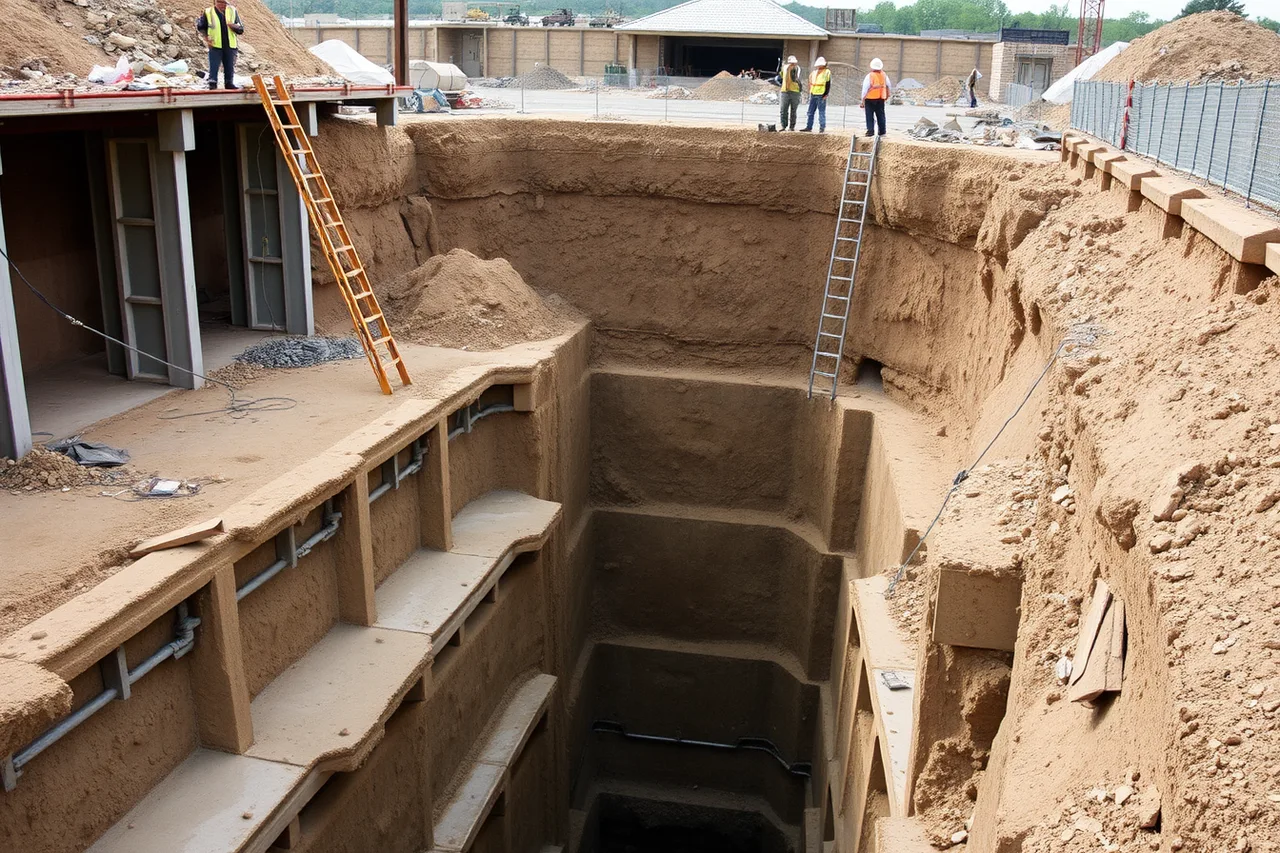
Trenching and excavation collapses are rare but catastrophic. A single fatality claim can exhaust a workers compensation policy limit and trigger employer liability exposure. OSHA's trenching emphasis program exists because the hazard is severe and preventable.
Heat illness has become a national enforcement priority. Cal/OSHA has a heat standard, and federal OSHA has used the general duty clause and a national emphasis program to cite heat hazards where no specific standard applies.
Heat claims are often medical-only at first, then escalate. A worker who collapses on a roofing crew may return to work, then develop kidney injury. Those claims are costly, and they repeat across a season if controls do not change.
Fall protection remains the most cited construction standard year after year. The fix is inexpensive: guardrails, anchors, training and inspection. The premium consequence of ignoring it is not. The hazard list OSHA maintains for the sector is on its construction industry page.
Struck-by and vehicle incidents on highway work zones drive both workers comp and commercial auto losses. If your crews work near traffic, your auto and workers comp underwriters will both ask about traffic control plans.
Silica and respiratory exposures generate long-tail claims. Those can take years to develop, which means today's exposure may show up in future policy years. Underwriters price that uncertainty through class code selection and deductibles.
A practical checklist for contractors before renewal:
- Current OSHA 300 log, 300A summary and 301 reports, signed and posted
- Written safety program with site-specific hazard assessments
- Fall protection, trenching and heat illness training records with dates
- Equipment inspection logs and corrective action documentation
- Subcontractor safety prequalification files
- Return-to-work and light-duty job descriptions
- Documented management review of every incident and near miss
Building a commercial coverage package around compliance evidence
A commercial coverage package is a set of policies that respond to different losses: workers compensation for employee injuries, general liability for third-party claims, commercial auto for vehicles, property for buildings and contents, and umbrella for excess limits.
Compliance evidence does not replace coverage. It changes what coverage costs and how easily you place it. Carriers reward documented controls with better loss costs, credits and broader terms.
Start with the workers compensation policy. Your experience mod is the single largest controllable premium variable. Lower the mod by closing claims quickly, reporting injuries within 24 hours and offering modified duty.
Then align general liability limits with your contracts. If a general contractor requires additional insured status and waiver of subrogation, your policy must provide both. Missing endorsements can void contract compliance even when coverage exists.
Commercial auto and umbrella follow the same logic. Driver records, telematics and documented maintenance reduce auto premium. Umbrella pricing depends on underlying limits and loss history across all lines.
Here is a hypothetical example with illustrative figures. A mid-size framing contractor in Georgia with 40 employees runs a 1.15 experience mod and pays about $180,000 in workers compensation premium. Federal OSHA covers private employers there, and a fall protection citation lands after a jobsite inspection.
The citation itself is a fine that the policy will not pay. The bigger cost is the renewal. The carrier adds a surcharge, the mod rises to 1.22, and the premium increases by roughly 6 percent, about $11,000. The contractor also loses prequalification on two bids.
After investing in fall protection training, weekly toolbox talks and a return-to-work program, the contractor closes the next year with no lost-time claims. The mod falls to 1.05, and the premium drops below the original level. Compliance paid for itself in one renewal cycle.
The same pattern holds for heat and trenching. Documented controls turn a citation risk into an underwriting credit. Undocumented controls turn a near miss into a premium increase.
Where OSHA obligations end and employment liability begins
OSHA regulates workplace safety. It does not regulate hiring, firing, wages, discrimination or leave. Those obligations come from employment law, and they are covered by a different policy: employment practices liability, usually written as EPLI.
EPLI responds to claims such as wrongful termination, harassment, discrimination and retaliation. It is not part of workers compensation, and it is not covered by general liability. Employers often assume one of those policies will respond, and it will not.
Workers compensation is an exclusive remedy for most workplace injuries, meaning employees generally cannot sue for negligence. Exceptions include intentional acts and, in some states, gross negligence. Those exceptions are where employer liability coverage and EPLI can both be implicated.
OSHA retaliation rules add a third layer. An employee who reports a hazard or injury is protected, and a retaliation complaint can proceed even if the underlying safety citation is dismissed. Document your response to every report.
State employment rules vary widely. California, New York, Illinois and Washington have broader employee protections than many other states. If you operate in several states, your handbook and your EPLI limits should reflect the strictest state you touch.
Your broker should map OSHA compliance, workers compensation and employment liability on one page. When a claim arrives, the first question is which policy responds, and the answer depends on who was harmed and how.