Features
How climate risk changes commercial property premiums in Californian and Floridian markets
Commercial coverage premiums in California and Florida diverge sharply as wildfire, hurricane and hail risk reshape commercial property pricing.
What to take away
- Commercial coverage premiums in California and Florida are being reset by wildfire, hurricane and hail risk, not by the general inflation that makes headlines.
- California property premiums track wildfire zone maps and FAIR Plan takeout pressure, while Florida property premiums track roof age rules, hurricane deductibles and reinsurance cost.
- Catastrophe models, not adjusters, set the baseline loss cost that underwriters load with reinsurance and expense.
- NFIP flood insurance for commercial buildings and contents is a separate purchase with its own limits, and it does not cover business interruption.
- Deductibles, limits and coinsurance are the levers a risk manager can pull when the base rate is out of reach.
Wildfire, hurricane and hail exposure mapped across California and Florida
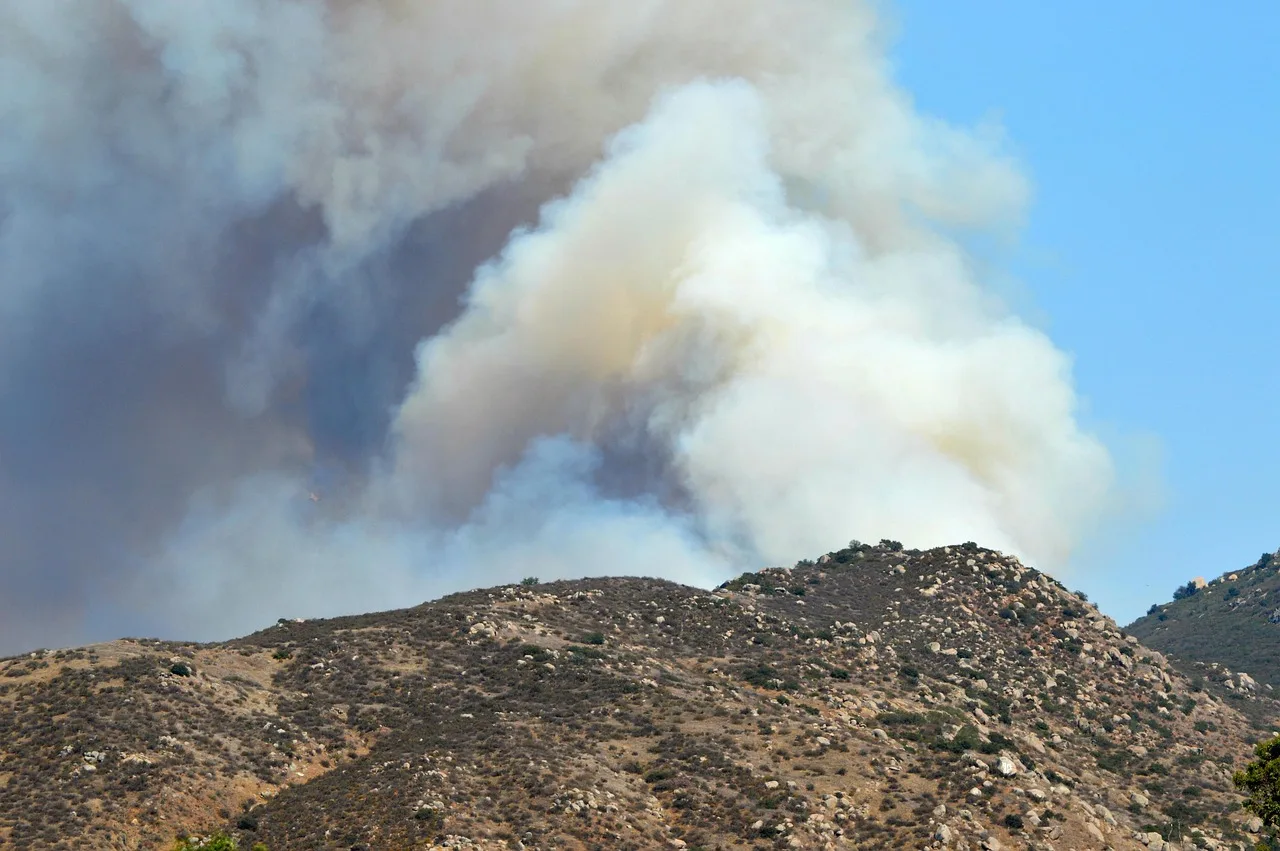
California's property risk map is dominated by wildfire. The state's fire hazard severity zones, maintained by Cal Fire, run from moderate through very high, and most commercial carriers overlay those zones with their own brush and terrain scores.
Perils by State
California
- Dominant peril
- Wildfire
- Secondary peril
- Hail (Central Valley)
- Season length
- Short
- Loss type
- Total loss
- Key defense
- Defensible space
Florida
- Dominant peril
- Hurricane wind
- Secondary peril
- Hail (smaller, scattered)
- Season length
- Long
- Loss type
- Wind and water
- Key defense
- Storm surge prep
A warehouse in the Central Valley prices very differently from an identical warehouse on a canyon edge in Los Angeles or Ventura County.
Florida's map is dominated by wind. The Florida Office of Insurance Regulation publishes hurricane loss projections by county, and the divide between coastal and inland counties is steep. A retail strip in Miami-Dade or Broward faces wind speeds that a comparable strip in Orlando or Gainesville does not.
Hail is the quiet third peril. It is not a coastal story. Hail frequency and severity are highest in the central United States, and Texas, Oklahoma, Kansas and Nebraska carry the largest hail loss costs.
California and Florida both see hail, but Florida's hail is usually smaller and more scattered. California's hail is concentrated in the Central Valley and the Sierra foothills.
The three perils do not price the same way. Wildfire is a total loss peril with a short season and a heavy defensible space story. Hurricane is a wind and water peril with a long season and a storm surge story.
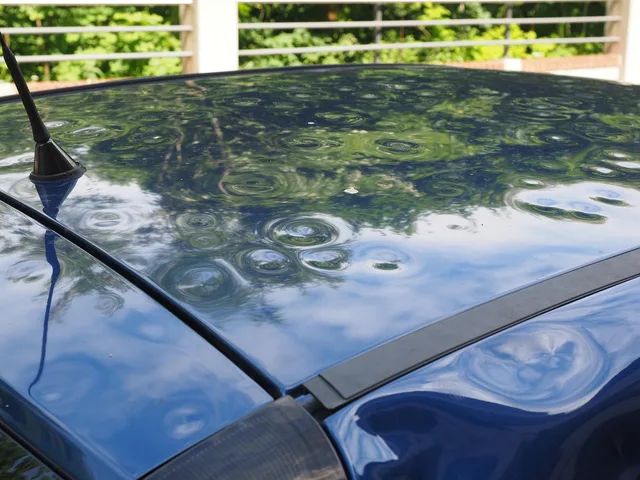
Hail is a partial loss peril that hits roofs and HVAC units and produces thousands of small claims rather than one large one.
NOAA maintains the climate and weather data that underwriters and catastrophe modelers use to build these views. The agency's climate information feeds long-range risk assessment, and its weather data feeds the short-range forecasts that drive pre-landfall underwriting holds.
How catastrophe models translate exposure into commercial property premiums
A catastrophe model is a simulation. It generates tens of thousands of synthetic storms or fires, runs each one against a portfolio of buildings, and produces a loss distribution. The output that matters to a premium is the average annual loss and the probable maximum loss at a chosen return period.
The model's inputs are the building's construction, age, roof type, occupancy, secondary modifiers such as shutters or fire-resistant roofing, and its geocoded location. Change the roof from shingle to standing seam metal in a hail zone and the modeled loss cost drops. Change the same roof in a wind zone and the drop is smaller.
Underwriters then load the modeled loss cost. The load covers reinsurance, expenses, profit and the cost of capital. That is why two buildings with identical model output can still price apart: they sit in different carriers with different reinsurance structures and different appetites.
Catastrophe reinsurance is the largest single load. A carrier that buys its reinsurance after a bad year pays more, and it passes that cost through. The commercial property coverage a buyer sees is the final number after all of these layers.
Model version changes matter too. When a major vendor releases a new hurricane or wildfire model, loss costs can move double digits in either direction for the same building. A renewal that jumps is not always a market signal. Sometimes it is a model signal.
California commercial property: wildfire zones, FAIR Plan and surplus lines
The California FAIR Plan is the state's insurer of last resort. It writes basic property coverage for commercial risks that cannot find coverage in the voluntary market. Its commercial limits are lower than what a large building needs, and its rates have risen as wildfire losses have mounted.
A FAIR Plan policy is usually a bridge, not a solution. A risk manager with a $20 million building may carry a FAIR Plan layer for the first tranche of loss and a surplus lines policy above it.
Surplus lines carriers, which are non-admitted and not backed by the state guaranty fund, write the wildfire-exposed layers that admitted carriers decline.
Surplus lines pricing in California is driven by wildfire model output, defensible space, roof class and water supply. A building with a private hydrant, a class A roof and cleared vegetation within 100 feet prices better than one without.
These are the same details that show up in commercial property mistakes when they are missing at the time of a loss.
The California Department of Insurance reviews FAIR Plan rate filings and has pushed for expanded commercial coverage. The direction of travel is toward more FAIR Plan capacity, not less, because the voluntary market continues to retreat from high-hazard zones.
A practical point: California does not have a state hurricane problem, so wind deductibles are not the issue. The issue is wildfire deductibles, which are often written as a percentage of the building limit rather than a flat dollar amount. A 5 percent wildfire deductible on a $10 million building is a $500,000 retention.
Florida commercial property: hurricane deductibles and roof age rules
Florida's commercial property market is defined by two rules that do not exist in California. The first is the hurricane deductible, which applies to named storms and is usually expressed as a percentage of the insured value.
Hurricane Deductible Impact
5% hurricane deductible
$5 million building limit
$250,000 retention per storm
The second is the roof age rule, which allows carriers to decline or surcharge a building whose roof is older than a set age, often 15 or 20 years.
A Florida commercial policy typically carries a separate hurricane deductible, a separate non-hurricane wind deductible, and an all-other-perils deductible. The hurricane deductible can be 2, 3, 5 or even 10 percent of the building limit. On a $5 million building, a 5 percent hurricane deductible is a $250,000 retention per storm.
Roof age rules have a direct premium effect. A building with a roof at year 18 of a 20-year useful life may face a surcharge, an actual cash value settlement on the roof, or a declination. Replacing the roof before renewal is often the single highest-return capital project a Florida owner can make.
Florida also has a state-backed reinsurance facility, the Florida Hurricane Catastrophe Fund, which provides lower-cost reinsurance to carriers. That facility reduces the reinsurance load relative to what a purely private market would charge, but it does not eliminate the hurricane deductible or the roof rule.
NOAA's seasonal outlook is part of the underwriting calendar. The agency's Atlantic hurricane season prediction is watched by carriers as they set capacity and by buyers as they time placements. A below-normal forecast does not lower rates by itself, but it can soften the market at the margin.
NFIP flood considerations for commercial buildings and contents
Flood is excluded from most commercial property policies. The National Flood Insurance Program, run by FEMA, is the primary market for commercial flood coverage in both states. It writes building coverage and contents coverage separately, and a commercial buyer can purchase one or both.
The NFIP commercial limits are lower than what a large building needs. A risk manager with a $15 million building will typically layer NFIP coverage with private flood insurance or a surplus lines difference in conditions policy. The NFIP layer handles the first tranche, and the private layer handles the excess.
NFIP rates are moving toward full-risk rates under the agency's pricing methodology. That means a commercial building in a Special Flood Hazard Area can see a large increase at renewal. The flood insurance program details explain the coverage forms and the elevation requirements that drive those rates.
A key gap: NFIP does not cover business interruption. A flood that closes a business for three months produces a BI loss that the NFIP policy will not pay. That loss has to be covered by a separate policy or absorbed.
The business interruption coinsurance formula is the tool that tells a buyer whether the BI limit is adequate before the loss, not after.
After a declared disaster, FEMA also provides business assistance that can help with recovery, but it is not a substitute for insurance. It is a bridge for uninsured losses, and it is not priced into the premium.
Reinsurance and catastrophe load: why two similar buildings price apart
Two identical buildings in the same city can price 40 percent apart. The difference is rarely the base rate. It is the reinsurance load, the carrier's appetite and the model version.
A national carrier with a large Florida book buys reinsurance in layers. Its cost of reinsurance per unit of limit is higher in Florida than in California, all else equal, because the hurricane peril is more correlated. Correlation means many losses at once, which is what reinsurance is priced to cover.
A regional carrier with a smaller book may retain more risk and buy less reinsurance. That can make it cheaper in a quiet year and more expensive after a loss.
The commercial property requirements that carriers impose, such as roof age, wiring age and occupancy, are often a proxy for how much reinsurance the carrier is willing to commit.
The catastrophe load also varies by return period. A carrier that buys reinsurance at a 1-in-100-year attachment prices differently from one that buys at 1-in-250. The buyer rarely sees this, but it shows up in the quote spread.
A worked example makes the point. Take two 50,000 square foot warehouses, one in Riverside, California and one in Tampa, Florida. Both are masonry, both have class A roofs, both are valued at $8 million. The California building sits outside a very high fire hazard severity zone. The Florida building sits in a wind-borne debris region.
Reinsurance and catastrophe load
Riverside, CA
- Building value
- $8,000,000
- Base loss cost
- 0.12%
- Catastrophe load
- 0.20%
- Reinsurance load
- 0.08%
- Expense and profit
- 0.10%
- Indicated rate
- 0.50%
- Annual premium
- $40,000
- Hurricane or wildfire deductible
- 2% wildfire
- Retention at that deductible
- $160,000
Tampa, FL
- Building value
- $8,000,000
- Base loss cost
- 0.18%
- Catastrophe load
- 0.55%
- Reinsurance load
- 0.22%
- Expense and profit
- 0.12%
- Indicated rate
- 1.07%
- Annual premium
- $85,600
- Hurricane or wildfire deductible
- 5% hurricane
- Retention at that deductible
- $400,000
The Florida building pays more than twice the premium and carries a larger retention. The gap is not the building. It is the peril.
Structuring deductibles and limits around regional climate risk
Deductible structure is where a risk manager has the most control. A lower deductible raises premium. A higher deductible lowers it. The trade is a financing decision, not an insurance decision.
Structuring deductibles and limits
- Model the retention. Take the highest deductible the balance sheet can absorb in a single year without breaching a covenant. That is the ceiling.
- Price the trade. Ask each carrier for quotes at two or three deductible levels. The premium credit per dollar of retention tells you whether the trade is efficient.
- Match the deductible to the peril. A percentage hurricane deductible in Florida and a percentage wildfire deductible in California should be set separately from the all-other-perils deductible.
- Check the coinsurance clause. A blanket limit with a coinsurance clause can penalize a buyer who insures to less than the required percentage of value. Run the numbers before the renewal, not after.
- Review limits against the probable maximum loss, not the replacement cost. A limit that covers replacement cost but not the PML leaves a gap the balance sheet has to fill.
- Document the risk control. Defensible space in California, roof replacement in Florida, and hail-resistant roofing in the central states all produce credits. Keep the documentation current.
A pre-loss checklist for a high-risk commercial property:
- Confirm the wildfire zone or wind-borne debris region designation for each location.
- Verify roof age, roof class and any roof warranty documentation.
- Confirm the NFIP building and contents limits and the elevation certificate on file.
- Review the hurricane or wildfire deductible as a dollar amount, not just a percentage.
- Run the business interruption coinsurance test against the current limit.
- Collect defensible space, shutter or roof mitigation evidence for credit.
- Confirm the surplus lines or FAIR Plan layer and its claims reporting requirements.
The commercial property claim process rewards the buyer who has these records before the loss. After the loss, the records are the difference between a full payout and a negotiation.