Guides
General liability coverage: what counts as third party, and what does not
General liability covers harm to other people and their property, and nothing else. The gaps are deliberate, and each has a policy built to fill it.
General liability sounds like the policy that covers you generally. It is not, and the assumption behind that reading causes more uncovered claims than any exclusion does.
The line has a narrow job: harm your business causes to other people and to their property. Everything it leaves out is left out on purpose, and every gap has a neighboring product built to fill it.
Understanding the shape of the hole beats memorizing the policy contents, because the hole is where the surprises live.
What to take away
- This line is about third parties. Injury to your own staff, damage to your own property, and losses to your own business sit elsewhere by design.
- The gaps are deliberate. Each one corresponds to a different line of coverage, and knowing which is which is most of the skill.
- Almost nothing legally requires you to carry it, and almost everyone you do business with will require it anyway.
- How your business is classified at the point of quoting shapes the whole policy. Get the description of what you do right at the start.
What "third party" is doing in that sentence
The word divides the entire insurance market, so it is worth being precise.
You are the first party. Your insurer is the second. A third party is anyone else: a customer, a visitor, a passer-by, a neighboring business, a client whose property you were working on. Liability insurance responds when you are legally responsible for harm to one of those people.
That single boundary explains the exclusions people find surprising. Your employee is not a third party in the relevant sense, because workplace injury has a separate system.
Your own building is not a third party's property, and your own lost revenue is not somebody else's loss. None of these are denied to you; different products handle them with different rules, different limits, and different claims processes.
The gaps, and what sits in each one
This map is the most practical thing on the page. When somebody says "we have insurance," what they usually have is one item from this list.
Which policy responds
General liability
- Visitor injured on premises
- Yes
- Employee injured on the job
- No
- Business vehicle injures someone
- No
- Own building or stock damaged
- No
- Client loses money from your advice
- No
- Data incident affects held information
- No
Workers comp
- Visitor injured on premises
- No
- Employee injured on the job
- Yes
- Business vehicle injures someone
- No
- Own building or stock damaged
- No
- Client loses money from your advice
- No
- Data incident affects held information
- No
Commercial auto
- Visitor injured on premises
- No
- Employee injured on the job
- No
- Business vehicle injures someone
- Yes
- Own building or stock damaged
- No
- Client loses money from your advice
- No
- Data incident affects held information
- No
Commercial property
- Visitor injured on premises
- No
- Employee injured on the job
- No
- Business vehicle injures someone
- No
- Own building or stock damaged
- Yes
- Client loses money from your advice
- No
- Data incident affects held information
- No
| What happened | Which line generally responds |
|---|---|
| A visitor is injured on your premises, or by your work | General liability |
| An employee is injured doing their job | Workers compensation |
| Someone is injured by a vehicle used for your business | Commercial auto |
| Your own building, stock, or equipment is damaged | Commercial property |
| Your business cannot trade after a loss | Business interruption |
| Your advice, design, or professional work causes a client financial loss | Professional liability |
| A data incident affects information you hold | Cyber |
| A decision about hiring, firing, or managing is challenged | Employment practices and management liability |
| A pollution incident is attributed to your operations | Environmental impairment |
| A claim exceeds the limit on one of the lines above | Umbrella or excess |
Two things follow. First, a claim can fall between two of these, or trigger two at once, which is why insurers care so much about how the event is described. Second, buying one line does not narrow the others: gaps between policies are common, and they are found at claim time unless somebody looks for them at renewal.
Nobody requires it, and everybody requires it
As a matter of law, this line is generally not mandated the way vehicle and employee coverage often are. As a matter of practice, you will be asked for it constantly.
Commercial leases commonly require it, with the landlord named. Client contracts require it, frequently with specific arrangements about whose policy responds first. Lenders and franchisors require it. Trade licensing bodies sometimes require it as a condition of the license. Larger customers require it before they will onboard you as a supplier, and their procurement systems will reject you without evidence.
The practical consequence: the contract, not the statute, usually sets your standard. Read what each agreement actually demands before you buy, because contractual wording can call for things a standard policy does not automatically include. A clause you agreed to and cannot satisfy is a breach you are carrying whether or not anyone has claimed.
What the rating is really measuring
Pricing in this line is not a judgment about your character. It is an attempt to estimate how much contact your business has with other people and their property, and how badly that contact can go.
The inputs are consistent even though the numbers are not, and none of the figures belong in an article. Ask your broker what applies to you:
- Classification.How your operations are categorized. This is the single most consequential item, because it determines which loss patterns you are grouped with. A wrong or outdated class code follows you for years.
- Exposure basis.Insurers measure the size of the risk against something: revenue, payroll, square footage, number of units. Which measure is used varies by classification.
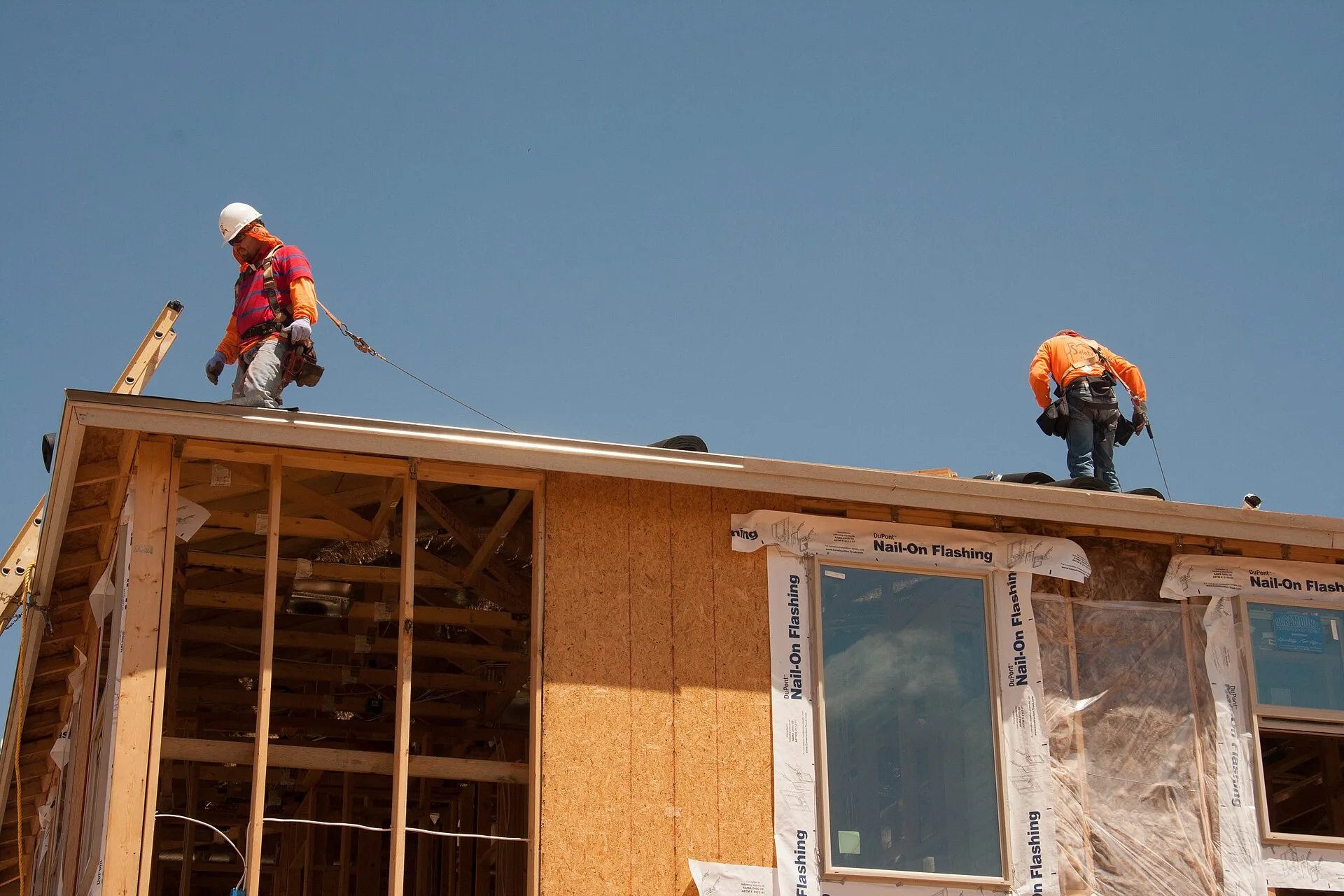
- Where the work happens.Your premises only, customer premises, or heights, excavation, and hot work, which are underwritten quite differently.
- What you leave behind.Completed work that can fail after you have gone is treated as a distinct exposure from work in progress.
- Subcontractors.Whether you use them, and whether you collect evidence of their own coverage.
- Loss history.Frequency of small claims usually influences terms more than one severe event.
The controllable part is the accuracy of the description. Businesses drift: a new service, a new material, a new kind of site. If the description on the policy stopped matching the business two years ago, that is a problem you own.
Safety practice sits underneath all of it, and the OSHA resources for small business are a reasonable place to start on the part of this you can actually change.
Four beliefs that cause the trouble
"The certificate proves we are covered." A certificate is a summary issued for someone else's convenience. It confers nothing, and it can describe a policy that has since been canceled or amended.
"We are covered for anything that goes wrong." The insuring agreement is narrow and the exclusions are long. Coverage is the intersection of what the policy grants and what it does not take back.
"Our subcontractors are their own problem." You can be brought into a claim arising from work done by someone you engaged. Collecting evidence of their coverage, and checking that it is current rather than filed once, is basic practice.
"Our employees are covered by it." They are not, and this is the misunderstanding with the largest consequences. Injury to your own workers runs through a separate system entirely, built on a state-by-state bargain that trades the right to sue for benefits paid without proof of fault. That is why it sits apart from liability insurance rather than inside it.
When something happens
Notice provisions are conditions, not courtesies, and late notice can independently damage an otherwise straightforward matter.
Report promptly even without a claim or if you believe you are not responsible. Reporting is not admitting.
Preserve photographs, the site as it was, the work order, the maintenance record, and names of anyone present; send contact from the other side's representatives to your insurer, and do not discuss fault at the scene.
Where to check what this page cannot tell you
Required amounts, if any apply to your trade, come from your state's licensing authority. Insurer conduct and complaint handling sit with your state insurance department.
Policy wording comes from the policy in front of you. For a contract, claim, or enforcement notice, talk to a broker and, if money is at stake, a lawyer in your state.
Common questions
How much coverage should I carry?
No article can answer that, and be wary of any that offers a number. The inputs are what your contracts require, the value of what you could damage, the assets you would be defending, and what your broker sees on comparable operations. Decide it with someone who can see your actual exposures.
Does it cover work I finished years ago?
That depends on how the policy treats completed operations and on how the timing provisions work. It is a question to put to your broker in writing, because the answer determines whether stopping trading leaves you exposed.
Is a claim the same as being sued?
No. A demand can arrive long before any proceedings, and the policy generally has something to say about both. Notify at the earliest point rather than waiting for a formal document.
Do I still need it if I work alone from home?
Working alone removes the employee question. It does not remove the third party question, and a homeowner's policy is generally not written for business activity. If customers visit, if you visit them, or if you work on anything belonging to someone else, the exposure exists regardless of your size.
In this guide
- 5 things to understand about general liability requirementsGeneral liability requirements come from two places: what an insurer asks before quoting, and what your contracts demand. Keep both lists together.
- General liability examples: what the wording tests in each scenarioGeneral liability examples: six invented scenarios run through four tests in the standard ISO wording to show which part of the policy decides each one.
- Stale certificates and late notice keep general liability mistakes hiddenGeneral liability mistakes are free for years and then are not: certificates nobody checked, stale descriptions, late notice, and unread audit sheets.
- Which general liability insurers to shortlist, and whyGeneral liability insurers worth shortlisting differ by appetite, policy form, and claims handling, so match the carrier to your trade before comparing price.
- Handling a general liability review, offer, or disputed claim in three stepsThis general liability review guide gives three practical steps for checking your policy, comparing an offer, and responding to a coverage decision.